
PHASE ONE Funds Precision Oncology Research Aiming to Transform Treatment for Advanced Cancers
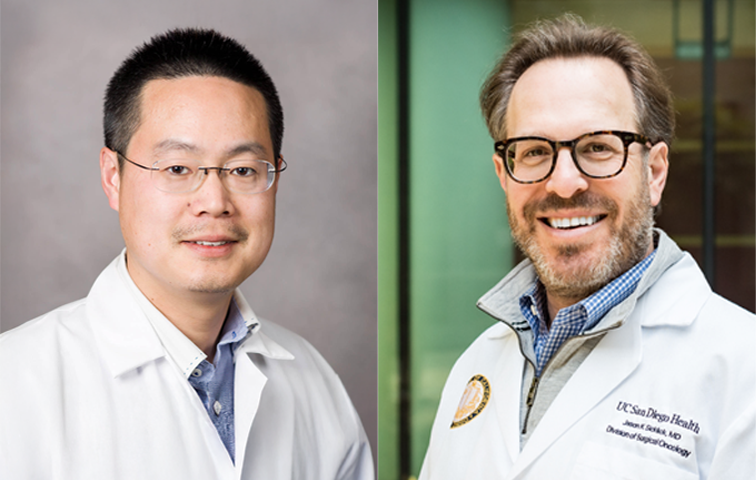
Left to right: Shumei Kato, MD and Jason Sicklick, MD, FACS
PHASE ONE Foundation has awarded Jason Sicklick, MD, FACS and Shumei Kato, MD at the University of California San Diego a $250,000 Medical Grant to support STRIPe, the STudy of Real-world Individualized Precision-oncology, a randomized Phase II clinical trial designed to evaluate whether personalized, N-of-1 molecularly matched combination therapies may improve outcomes for patients with advanced aggressive cancers.
For patients facing cancers with poor prognoses and limited standard treatment options, the study represents a promising effort to tailor treatment more precisely to the biology of each individual tumor.
Advanced aggressive cancers remain among the most difficult challenges in oncology. Even when two cancers appear similar, they can differ significantly at the molecular level, which can influence how they respond to treatment. Precision oncology has emerged as a promising strategy in this setting by helping physicians look beyond the tumor’s location in the body and instead focus on the biologic features that may be driving its growth.
An earlier prospective clinical study led by Dr. Sicklick, I-PREDICT, enrolled patients with serious, advanced malignancies and showed that administering individualized precision-oncology regimens was safe and feasible. The study also found that better-matched regimens were associated with improved outcomes, including progression-free survival and overall survival. Those findings helped lay the groundwork for STRIPe, which is designed to evaluate that approach more rigorously in a randomized setting.
“In the rare disease community, patients are often referred to as ‘zebras’ because every case is unique. We believe the same is true in cancer—no two patients or tumors are exactly alike, just as no two zebras share the same pattern of stripes. Our personalized, precision medicine approach is reflected in the name of our clinical trial, STRIPe.”–Jason Sicklick, MD, FACS, professor of surgery and adjunct professor of pharmacology at the UC San Diego School of Medicine.
STRIPe is expected to enroll approximately 280 patients with advanced aggressive cancers that are seen at the UC San Diego Moores Cancer Center. Participants must have at least one targetable alteration identified and remain eligible for at least one standard-of-care regimen. Patients will be randomized to receive either customized, molecularly matched therapies or standard-of-care treatment, allowing investigators to directly compare the two strategies in a prospective clinical trial.
To guide treatment selection, investigators will use molecular profiling tools including whole exome sequencing, RNA sequencing, circulating tumor DNA, and immunohistochemistry. Because cancer is often molecularly complex and heterogeneous, the study is designed to evaluate personalized treatment combinations, including multi-pathway targeting approaches employing FDA-approved therapies now available, including histology-agnostic options. The goal is to more precisely match treatment to the unique biology of each patient’s cancer using therapies that are already available in routine clinical practice.
That kind of forward-looking, patient-centered research is central to PHASE ONE’s mission. STRIPe reflects that commitment by exploring a more targeted approach to treatment for patients with advanced aggressive cancers, while also generating evidence that could help guide the future of cancer care.
“At PHASE ONE, we believe some of the most meaningful progress in cancer care comes from backing research that is both innovative and grounded in real clinical need. STRIPe is an exciting example of that approach: an ambitious study designed to test whether more individualized treatment strategies can open new doors for patients facing the hardest-to-treat cancers.” –Amanda Salvado, MD, PHASE ONE Granting Co-Chair
If successful, STRIPe could help strengthen the clinical evidence for employing personalized-precision oncology treatment strategies in patients with advanced cancers. It could also inform how future studies are designed for biologically complex, rare, and difficult-to-treat diseases. More broadly, it could help move cancer care closer to a model in which treatment is guided not only by where a tumor began, but by the specific biology that makes each patient’s cancer unique to them.